Under the Regulatory Reform (Fire Safety) Order 2005 (RRO), every non-domestic premises in England and Wales must have a designated Responsible Person — typically the employer, building owner, or occupier. That person has a statutory duty to take general fire precautions and ensure the premises are, as far as reasonably practicable, safe from fire.
Part of that duty is carrying out regular fire safety checks. These are not optional: failure to conduct them is a criminal offence that can result in prohibition notices, unlimited fines, or even imprisonment. More importantly, they save lives.
Below are the eight core checks every UK business should carry out, how often to do them, and who should be responsible.
Frequency: Weekly
Your fire alarm system should be tested every week by activating a different manual call point (break-glass unit) each time. This confirms that:
Results must be recorded in a fire safety logbook — including the date, time, call point used, and the name of the person carrying out the test. This log is inspectable by the fire authority at any time.
Reference: BS 5839-1:2017 (Fire detection and fire alarm systems for buildings) requires weekly testing of systems in most occupancies. A full system inspection and service by a competent person is also required at least every six months.
For engineers and facilities managers responsible for fire alarm systems, BFC's EAL Level 3 Fire Alarm Training provides the technical competence to inspect, test, and maintain systems to the required standard.
Frequency: Monthly (visual) | Annually (service)
Fire extinguishers need a monthly visual inspection by the responsible person or a designated employee. Each check should confirm:
Log each check. Any failed extinguisher must be removed from service immediately and replaced or repaired by a competent engineer.
Beyond monthly checks, an annual service under BS 5306-3 is a legal requirement. An extended service (full discharge and recharge) is required every five years.
For those working in fire extinguisher maintenance, BFC's EAL Level 3 Fire Extinguisher Training covers the full competency framework — from selecting the correct type for the risk to carrying out discharge testing and extended service.
Not sure how many extinguishers your premises needs? Use BFC's free Fire Extinguisher Calculator — based on BS 5306-8:2012, it calculates the minimum number and type for your building in seconds.
Frequency: Monthly (function test) | Annually (full duration test)
Emergency lighting ensures occupants can safely evacuate when mains power fails. Under BS 5266-1, two levels of testing are required:
Record all tests in the fire safety logbook. Failed luminaires must be replaced promptly — an unlit exit sign in an emergency is a serious life-safety failure.
Emergency lighting servicing must be carried out by a person with adequate knowledge and training. BFC's EAL Level 3 Emergency Lighting Training is designed for those who install, inspect, and certify emergency lighting installations.
Frequency: Quarterly (high-traffic) | Six-monthly or annually (low-traffic) | After any incident or damage
Fire doors are one of the most critical passive fire protection measures in any building. A properly specified and maintained fire door can contain fire and smoke for 30 or 60 minutes — but only if it is in good condition and closes correctly. A gap of a few millimetres or a missing intumescent seal can reduce that to near zero.
Regular checks should cover:
Inspection frequency should be risk-based. High-footfall doors (main entrances, stairwell access, plant rooms) warrant quarterly checks. Lower-traffic doors may be inspected less frequently but never less than annually.
Under the Fire Safety Act 2021 (which amended the RRO), responsible persons in multi-occupied residential buildings above 11 metres must carry out quarterly checks of fire doors in common areas — these must be carried out by a competent person.
BFC's EAL Level 3 Fire Door Inspection Training is the UK's leading qualification for fire door inspectors, covering BS 8214, BS 9999, and all the practical competencies needed to carry out thorough, auditable inspections.
Frequency: Daily
This is the most frequent check on the list — and the simplest. Before the premises opens each day, a responsible person should walk the escape routes and confirm:
These checks take only a few minutes. A blocked fire exit is one of the most common violations found during fire authority inspections — and one of the most easily preventable. It is also, in a real emergency, directly life-threatening.
Frequency: At least annually, or after any significant change
The fire risk assessment (FRA) is the cornerstone of fire safety compliance. Under Article 9 of the RRO, every non-domestic premises must have a current, suitable, and sufficient FRA. In practice, it must be reviewed:
An FRA that is more than 12 months old — or that predates significant changes — is effectively out of date. Using it as the basis for your fire precautions represents a compliance failure and, in the event of a fire, a serious legal liability.
Reviews should be carried out by, or in close consultation with, a competent person. For complex or higher-risk premises, an independent fire safety specialist is advisable.
BFC members receive access to technical guidance and direct support to help keep their FRA current. Find out more about the benefits of BFC membership.
Frequency: Annually, or when staffing changes
The RRO requires that all employees receive adequate fire safety information, instruction, and training. An annual review of training records should confirm:
For technical fire safety roles, formal EAL Level 3 accreditation through BFC is the industry benchmark for demonstrating competence. View all BFC training courses and check upcoming session dates in Telford and London.
Already qualified but looking to refresh? BFC's one-day refresher course is designed for experienced practitioners.
Frequency: Annually (audit) | Per system requirements throughout the year
Alongside in-house checks, a range of fire safety systems require professional servicing by competent contractors. As part of your annual fire safety review, confirm that the following are complete or formally scheduled:
All servicing contractors must be able to demonstrate competence through relevant qualifications, trade body membership, and appropriate insurance. BFC members include companies working across all of these disciplines. Search our member directory to find a vetted fire safety specialist in your area.
Building a written schedule and assigning clear responsibility is the most effective way to stay compliant. Use BFC's free interactive fire safety checks tool to tick off each check online, download a branded PDF, or print it for use on site.
| Frequency | Check |
|---|---|
| Daily | Escape routes and fire exits clear; emergency exit signage illuminated |
| Weekly | Fire alarm call point test; result logged in fire safety logbook |
| Monthly | Fire extinguisher visual check; emergency lighting one-minute function test |
| Quarterly | Fire door inspection (high-traffic doors); fire alarm service (Category L systems); fire door checks in common areas of residential buildings over 11m |
| Six-monthly | Full fire alarm inspection and service; wet riser testing |
| Annually | Fire risk assessment review; training records review; extinguisher annual service; emergency lighting full-duration test; sprinkler/suppression inspection; full maintenance schedule audit; fire door inspection (low-traffic) |
Across all eight checks, the consistent requirement is for a competent person. The RRO does not define competence narrowly, but it is understood to mean someone with the training, experience, knowledge, and other qualities needed to carry out the task correctly and recognise when something is wrong.
For technical fire safety disciplines, EAL Level 3 accreditation through BFC is the recognised standard. BFC is the only training provider accredited by EAL across all fire safety disciplines — fire alarms, fire doors, fire extinguishers, and emergency lighting — and the only body to deliver that training with practical, expert-led instruction and small class sizes.
If you or your team are due to train or retrain, view upcoming training dates in Telford and London. BFC members receive discounted training rates alongside a full range of technical support and guidance. Apply for BFC membership or find out more about what membership includes.
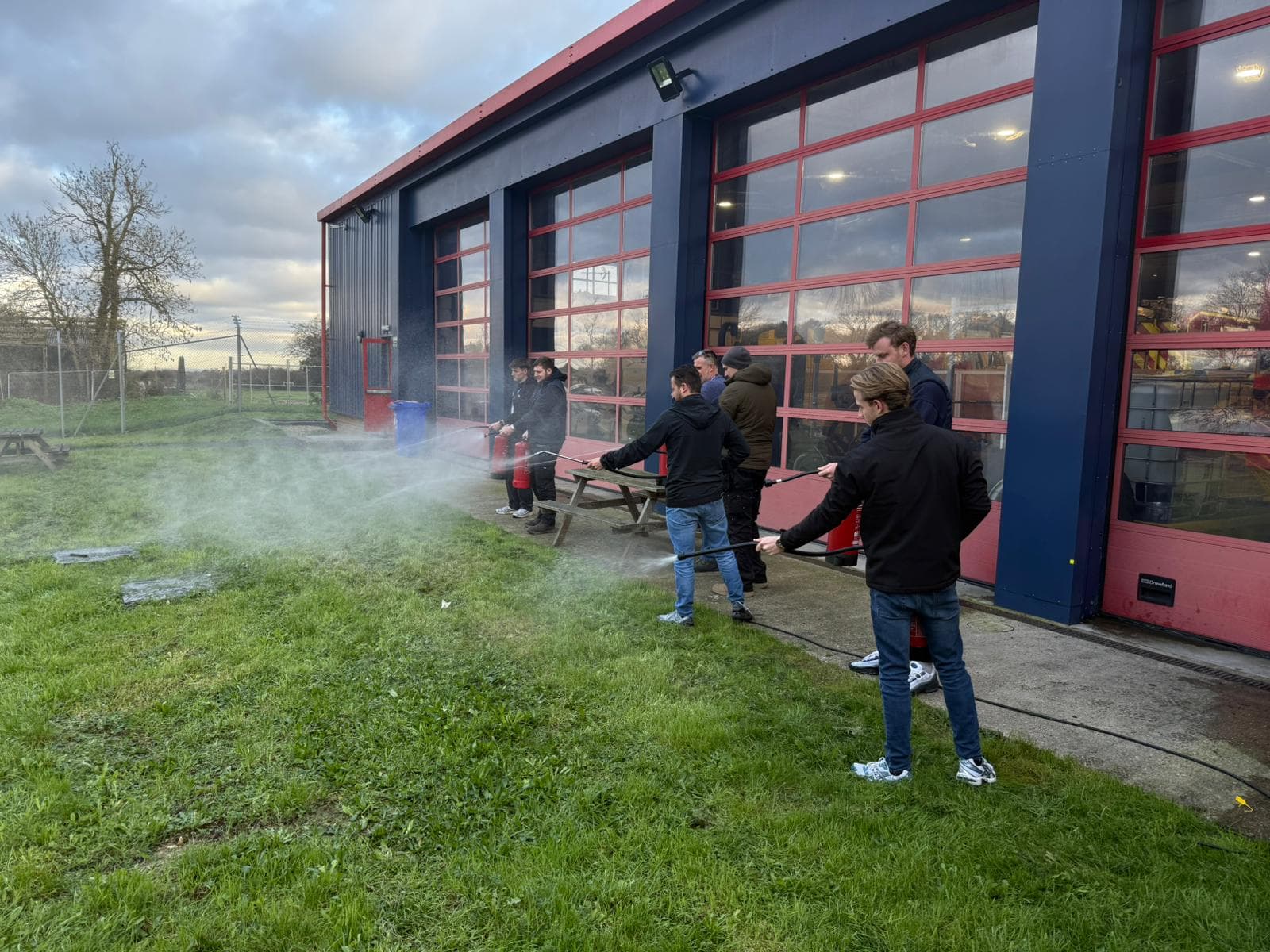
We are proud to announce the launch of our Young Person’s Foundation, a new initiative designed to help member companies recruit, train, and inspire the next generation of fire safety professionals.
The British Fire Consortium (BFC) is pleased to announce the successful launch of its brand-new website and the expansion of its training portfolio with the introduction of the Level 3 Award in the Design, Installation, and Maintenance of Emergency Lighting Systems.
.jpeg&w=3840&q=75)
Members can now access 27 editable RAMS templates—covering both Risk Assessments and Method Statements—built for real jobs in our sector. Download, edit, and adapt in minutes.