Competency is one of those words that’s become unavoidable in the fire sector. It appears in legislation, in guidance documents, and in just about every industry conversation. But despite how often it’s used, there’s still no single, shared understanding of what it really looks like in practice.
For some, competency is defined by qualifications. For others, it’s experience gained over time. In reality, it sits somewhere between the two, shaped by both knowledge and application. What’s increasingly clear, though, is that relying on experience alone is no longer enough. The pace of change across the industry has seen to that. In many ways, the conversation has shifted from “are people qualified?” to “are people truly capable of carrying out the role expected of them?” and those are not always the same thing.
That’s where training, done properly, becomes essential.
The British Fire Consortium is a trade association established with a clear purpose: to support the fire industry through training, guidance, and collaboration for all kinds of fire safety companies. It’s not about positioning itself as the authority, or delivering training for the sake of it. The focus is on raising standards in a way that reflects how people actually work. It is also about creating a more consistent baseline across the industry, where expectations are clearer and the quality of work is less dependent on individual interpretation.
Fire safety is not a static discipline. Standards evolve, products change, and expectations shift. In recent years, that shift has accelerated, bringing increased scrutiny across the built environment. What may have been acceptable a decade ago doesn’t always meet today’s requirements, and that gap is where problems can start to emerge. For many organisations, this has meant reassessing not just processes, but the competence of the people responsible for delivering them.
Training has a role in closing that gap, but only if it goes beyond simply delivering information.
There’s a clear difference between training that exists to tick a box and training that genuinely improves competency. The former is often quick, efficient, and easy to complete. The latter takes more time. It allows for discussion, encourages questioning, and creates space for people to apply what they’ve learned. It also creates accountability. When individuals are properly engaged in training, they are far more likely to challenge poor practice and apply standards consistently once they return to site.
That difference matters.
One of the ways the British Fire Consortium has approached this is by setting all of its training qualifications at Level 3. This reflects a commitment to a standard where learners are expected not just to understand information, but to use it in a practical context.
In simple terms, Level 3 training is designed to:
It also helps establish a recognised benchmark. In an industry where training quality can vary significantly, having a consistent level provides reassurance to employers, clients, and regulators alike.
It sits in a space that feels appropriate for much of the fire industry. It’s not purely academic, but it’s also not superficial. It requires engagement, and it demands a certain level of responsibility from those taking part. For many learners, it represents a step up from basic awareness training into something that more closely reflects the responsibilities they hold in their day-to-day roles.
That same thinking carries through into how the training is delivered. Smaller group sizes are encouraged wherever possible. While it might be financially better to fill a room with large numbers, the reality is that engagement suffers when it becomes too crowded.
From a practical perspective, it also allows trainers to spend more time with each individual, understanding their background and tailoring discussions accordingly.
More focused sessions create better outcomes. They allow for one-to-one interaction, more detailed feedback, and a clearer understanding of how individuals approach their work. In an industry where judgement plays a role, that kind of interaction is difficult to replicate in larger settings. It is often within these smaller discussions that the most valuable learning takes place.
Few areas highlight the importance of this approach more than fire door inspection.
Fire doors play a critical role in life safety, yet training around their inspection has historically been inconsistent. Some courses have leaned heavily on theory, offering limited opportunity to apply knowledge in a practical way. Others have moved entirely online, which may suit some learners but doesn’t always build confidence on site. There’s also the added complication that guidance around fire doors is not always contained in a single, unified standard.
In practice, that has led to a number of common issues:
For those entering the sector, or even those with experience, this can create uncertainty around what “good” actually looks like in practice.
Recognising these issues, the British Fire Consortium developed its own fire door inspection Level 3 qualification. This wasn’t about adding another option into the mix, but about responding to a clear gap that fire door specialists themselves had identified. The course itself has been shaped by real-world experience, drawing on feedback from individuals who had previously attended other training programmes and found them lacking in practical depth.
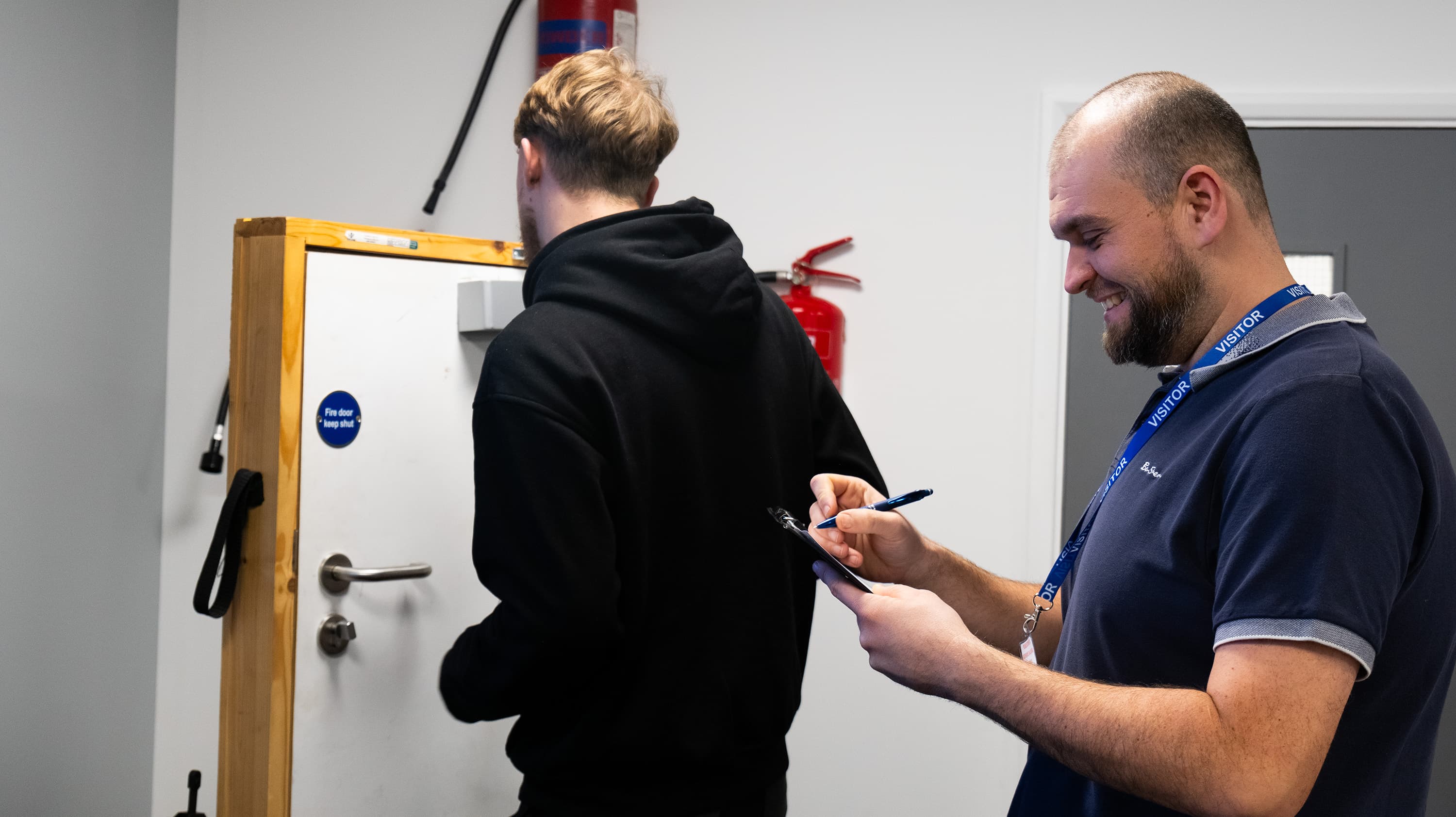
The course takes place over two days and combines both theory and hands-on learning. Real fire doors are used as part of the training, allowing participants to work in pairs and carry out inspections in a way that mirrors real-world conditions. That practical element is central, not secondary. Participants are encouraged to discuss their findings, challenge each other’s assumptions, and justify their decisions, all of which helps build confidence.
It reflects a simple idea: understanding what to look for is only part of the job. Being able to assess it properly, explain your reasoning, and document it clearly is what builds confidence and consistency. This is particularly important in environments where findings may be scrutinised or relied upon by others further down the line.
There’s also a wider audience for this kind of training than might be expected. While dedicated inspectors are the obvious candidates, there’s increasing interest from facilities managers, building owners, and those responsible for day-to-day site management. These are often the people who spot issues first, and giving them the knowledge to recognise potential problems can make a significant difference.
Expanding training to these groups helps embed fire safety awareness more broadly, rather than limiting it to specialists alone.
A similar approach has been taken with emergency lighting. The introduction of a Level 3 qualification in this area reflects the same emphasis on practical understanding.
Emergency lighting is one of those systems that is easy to overlook when it’s working correctly. When it isn’t, the consequences can be serious. Ensuring that those responsible for its design, installation, and maintenance have a solid grounding in both standards and application is an important step towards improving overall reliability.
It also supports better decision-making when systems need to be adapted or upgraded, particularly in more complex environments. As with fire doors, it’s not just about compliance. It’s about understanding why those standards exist and how they should be applied in real situations. That level of understanding is what ultimately leads to more resilient and effective systems.
Training doesn’t sit in isolation. It’s closely linked to membership, and the two tend to reinforce each other.
Those who engage with training often see the benefit of being part of a wider network. Equally, those who are already members are more likely to take advantage of the training opportunities available to them. It creates a cycle where knowledge and engagement build over time. In practical terms, stronger engagement in one area tends to lead to increased participation in the other.
Membership itself is not simply about discounted access to courses, although that is a practical benefit. It’s also about contributing to a collective effort to raise standards across the industry. In a sector where many organisations operate independently, that sense of shared purpose can be valuable. It provides a platform for sharing experiences, discussing challenges, and identifying areas where further guidance or support may be needed.
Despite the strengths of this approach, there are still challenges to address.
Some courses, particularly newer ones like fire door inspection, take time to gain traction. They require a greater time commitment and a more hands-on approach, which can make them harder to fit into busy schedules. There can also be a perception that more in-depth training is only necessary for specialists, which can limit uptake in the early stages.
Fire door training, in particular, has potential beyond the traditional inspection audience. Facilities managers, building owners, and even caretakers all have a role to play in maintaining fire safety. Reaching those groups could help improve standards more broadly. It also helps create a more proactive approach to maintenance, where issues are identified earlier rather than during formal inspections.
Another consideration is how training fits into the wider journey towards competency.
In some areas, a qualification on its own is not enough. Individuals may need to go on to complete additional assessments or join certification schemes in order to be formally recognised. This can involve further time and cost, which may act as a barrier. For some, this creates uncertainty around what steps to take next and how to progress within the industry.
At the same time, there is growing recognition of Level 3 qualifications as a meaningful step within these pathways. There is an opportunity to create clearer links between training and accreditation, helping individuals understand how to progress from initial learning through to full certification. Greater alignment between training providers and certification bodies would help simplify this process and make it more accessible.
Aligning these pathways would benefit not just individuals, but the industry as a whole.
Events such as Fire Door Safety Week help to bring these conversations into focus. They create an opportunity to highlight areas that might otherwise be overlooked and to reinforce the importance of getting the basics right.
But improving competency is not something that can be achieved through isolated efforts. It requires collaboration across the sector, from training providers and certification bodies through to manufacturers, installers, and regulators. Each has a role to play in shaping expectations and ensuring that standards are both understood and applied consistently.
Training is just one part of that picture, but it is a foundational one.
Without it, even the most detailed guidance can be misinterpreted. With it, there is a far better chance that standards will be applied consistently and effectively.
As the fire sector continues to evolve, the emphasis on competency is only likely to increase. New benchmarks, new technologies, and new ways of working will all bring their own challenges.
A recent example is the emerging recognition of Class L under ISO 3941, covering lithium-ion battery fires — a fuel type that doesn’t behave like conventional fires and can’t be tackled with conventional extinguishing methods. It’s a reminder that competency isn’t a fixed destination; even experienced professionals need to keep building on what they know as new hazards emerge. Read more in our article on Class L: Lithium-Ion Battery Fires.
Keeping pace with those changes requires more than occasional updates. It requires a commitment to continuous learning, both at an individual and organisational level.
That commitment is likely to become a defining feature of organisations that consistently deliver high standards.
The role of the British Fire Consortium within that is a supportive one. It exists to provide access to training that is practical, relevant, and aligned with the realities of the industry. It doesn’t claim to have all the answers, but it does aim to be part of the solution.
Ultimately, improving competency across the fire sector is a shared responsibility. Training plays a central role in that, not as a one-off exercise, but as an ongoing process.
Because in a field where the consequences are as significant as they are in fire safety, getting it right is not optional.
-1.png&w=3840&q=75)
British Fire Consortium AGM: A Look Back at Our 150th Meeting On the 2nd of October, members of the British Fire Consortium gathered at Macdonald Old England Hotel & Spa Windermere for this year's AGM, which also marked our 150th meeting. Here's a look back at the day
For someone starting out in the fire and security industry, there is a lot to learn.
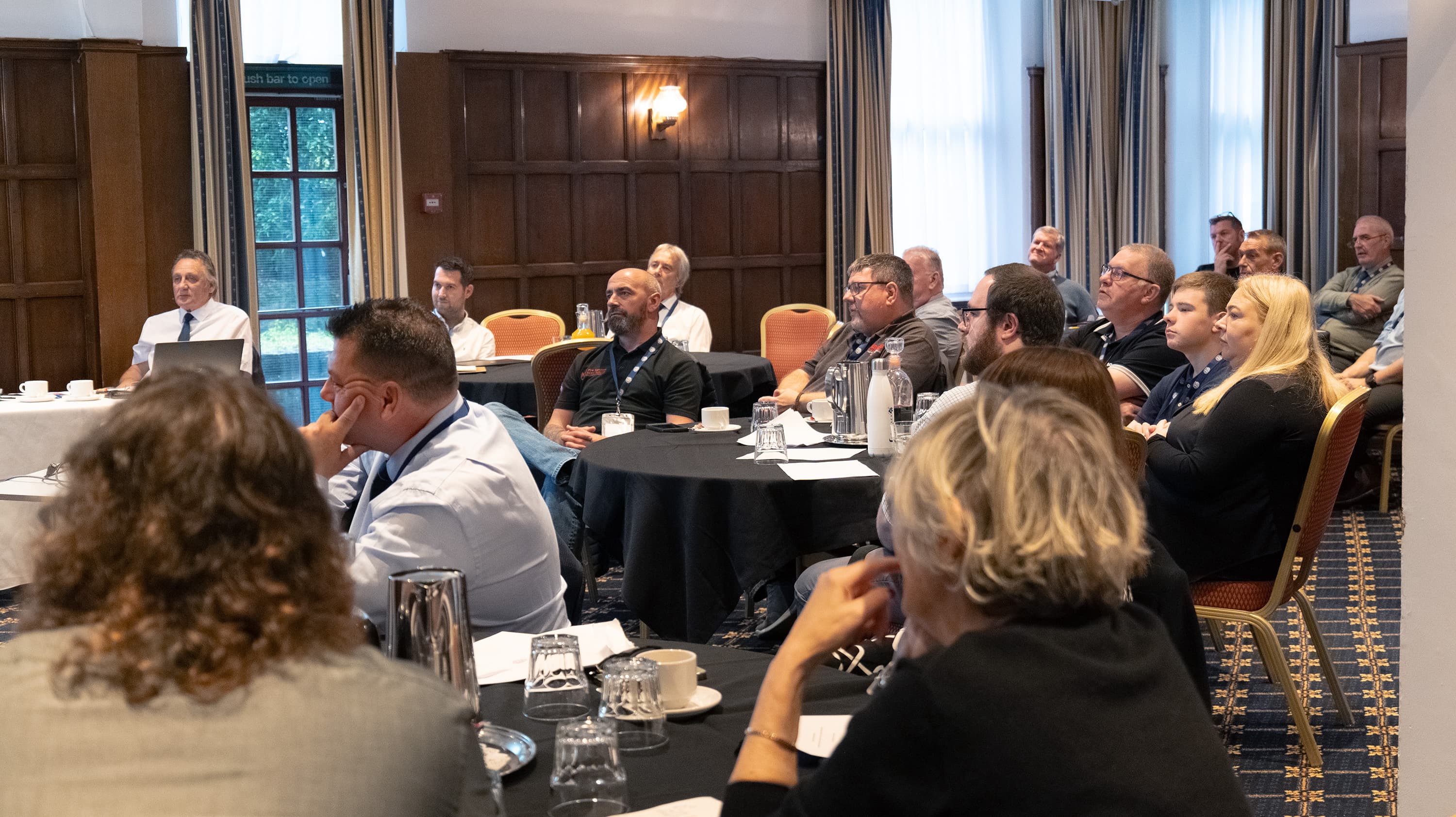
On 2 October 2026, BFC members will gather for this year's AGM, marking a milestone: the 150th meeting. To mark the occasion, we sat down with Graham Newman, BFC President a long-serving member, to trace the story from a conversation in a London hotel bar in the 1980s to the 240+ member organisation