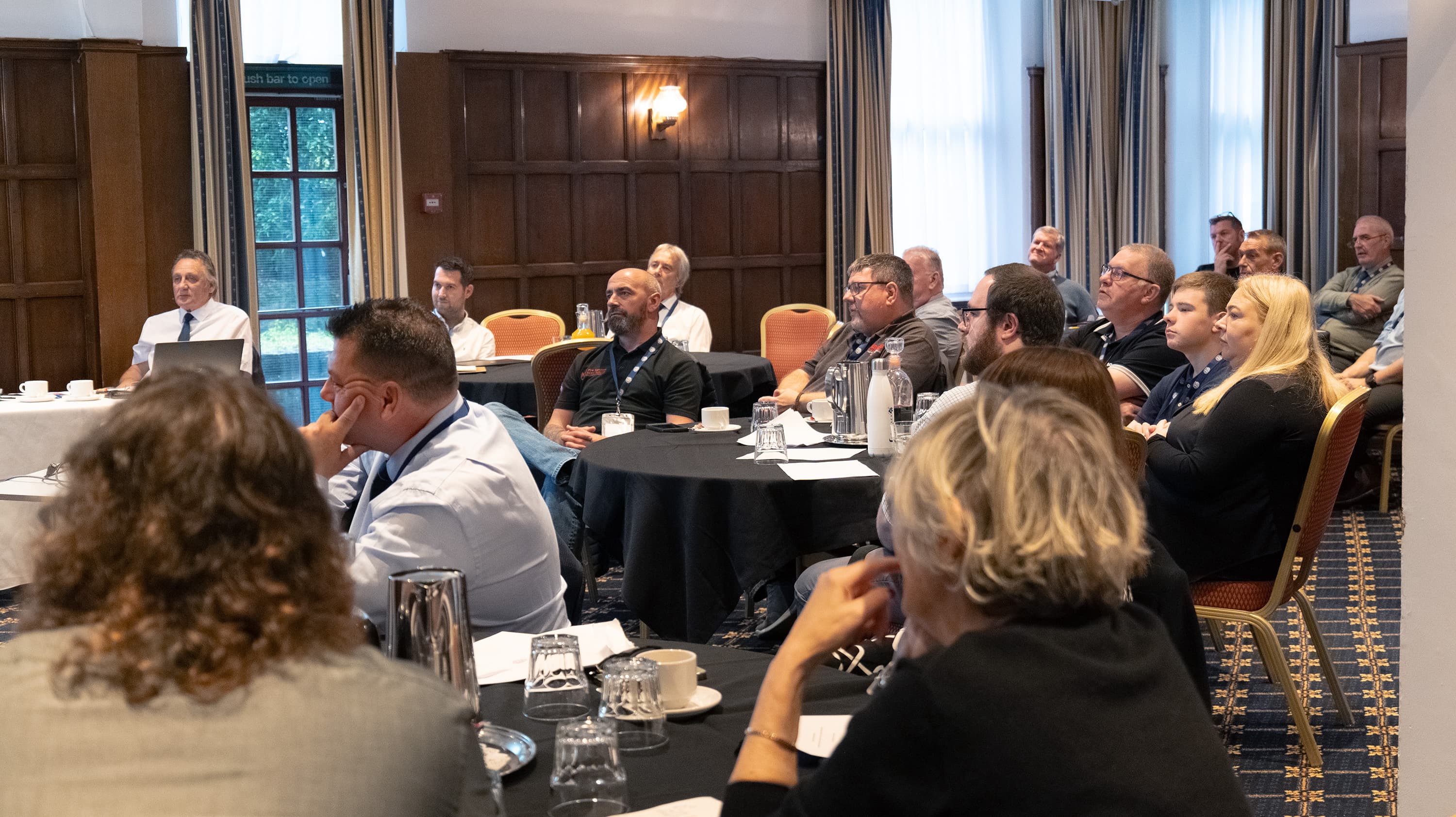
On 2 October 2026, BFC members will gather for this year's AGM, marking a milestone: the 150th meeting. To mark the occasion, we sat down with Graham Newman, BFC President a long-serving member, to trace the story from a conversation in a London hotel bar in the 1980s to the 240+ member organisation it is today
Back story
Like all great stories, the BFC's began over a pint. In 1983, four founding members met at London's Grosvenor Hotel, at a time when emerging quality standards were putting increasing pressure on businesses to conform. Rather than create another system where every company had to fit the same mould, they believed there was a better way.
Their idea was simple: create a Trade Association that could support businesses on their own path to growth and professionalism, without making full accreditation a prerequisite for membership.
That principle still sits at the heart of the BFC today. We do not believe there is only one way to demonstrate great fire protection practice, but we do believe in setting high standards, sharing knowledge and helping members continually improve.
By the time those four founding members had emptied their glasses, the British Fire Consortium had been born.
Graham joined in 1984, when the BFC had around 30 members, and that founding philosophy never wavered. Invited onto various boards and committees over the years, he was often challenged on it, but his response was always the same: "We don't insist our members do anything but work to British Standards." He became BFC President in the early 2000s, winning a vote he had not put his own name forward for, by a landslide, and has held the title ever since.
Training
The BFC has since built a genuine training legacy, rooted in the groundwork laid by former Chubb trainer Peter Bollins – with industry-leading fire extinguisher qualifications. Alarm training followed, after Graham encouraged Tom Brookes to join the committee behind the BS 5839 standard, which he now chairs, so training is delivered by the same people who help write the standards it is built on.
Today, training spans fire doors, fire alarms and emergency lighting, alongside the BFC's extinguisher roots. The BFC remains the only organisation offering EAL Level 3 approved training across all its courses, and unlike some other training providers, that training travels: it moves around the country, giving better accessibility to attendees.
For Graham, though, the real legacy lies elsewhere: in the small businesses it has helped build. Advice and a genuine willingness to back engineers striking out on their own have helped a great many members build a small business into a lifelong career, members who have gone on to service Buckingham Palace, fit extinguishers along the Panama Canal and work on China's bullet train network. Small business has never meant small ambition.
Growth
Membership has grown from around 20 to 30 in the BFC's early years to roughly 240 today, and the organisation has grown in range as well as in numbers. What began as a group of extinguisher companies now brings together specialists across fire doors, fire alarms, emergency lighting and risk assessment, all sitting under one roof.
What members value just as much as the technical support is the sense of community: whatever problem someone is wrestling with, chances are someone else in the room has faced it too.
Membership also brings practical benefits:
Access to the Young Person's Foundation
Discounted training
Use of the recognised BFC member badge
Valuable networking and events
Cost-effective industry affiliation
Dedicated technical support
Discounts on British Standards
Brand awareness
Purpose of the BFC
Graham says the purpose of the BFC has not changed in over 40 years: training, guidance and support for the UK fire industry. That support is built to be genuinely accessible, particularly for smaller businesses and those who have only just gone out on their own.
That founding principle of never dictating to members is still what defines the BFC today. It means the BFC has always had the greatest impact on small and medium-sized businesses and independent technicians, who often rely on guidance, regular industry updates and high-quality training from an external source to remain compliant.
Forty-two years and 150 meetings on, that founding spirit is still what brings members through the door: high standards, freely shared knowledge and the freedom to grow on your own terms. It is the same spirit the BFC will carry into its next 150 meetings.
-1.png&w=3840&q=75)
British Fire Consortium AGM: A Look Back at Our 150th Meeting On the 2nd of October, members of the British Fire Consortium gathered at Macdonald Old England Hotel & Spa Windermere for this year's AGM, which also marked our 150th meeting. Here's a look back at the day
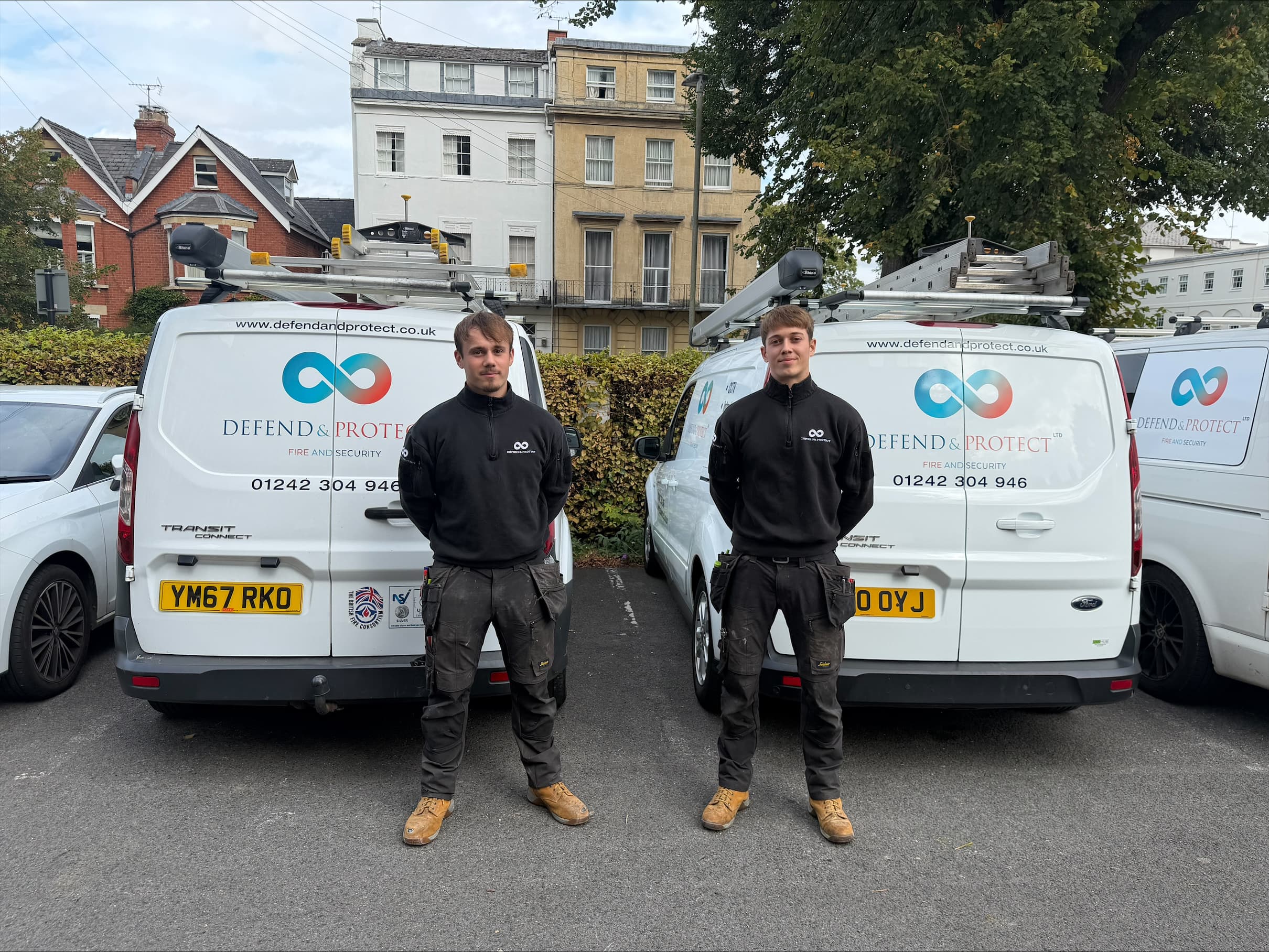
For someone starting out in the fire and security industry, there is a lot to learn.

The third and most recent edition of ISO 3941 published in January 2026, introduces a formal addition of Class L. These are fires involving lithium-ion batteries.